

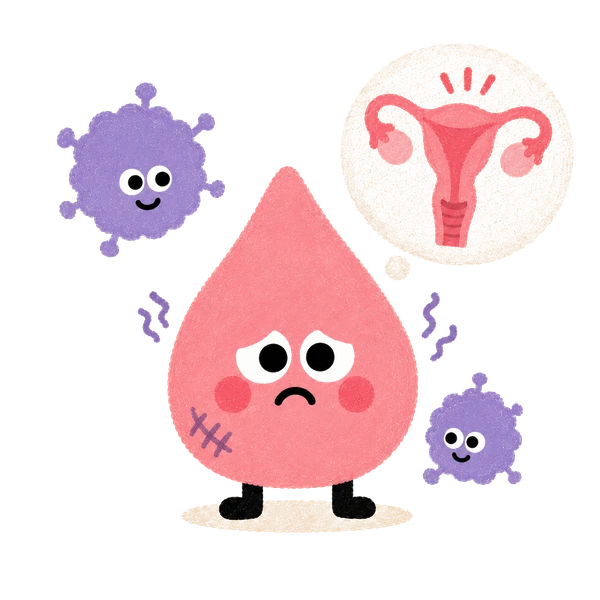
About yeast infections
Unusual discharge and itching?
What exactly is it?
A small amount of a fungus called candida normally lives in the vagina without causing problems. When the balance is thrown off, it can multiply and cause irritation — this is a yeast infection (vaginal candidiasis).
About 7 in 10 people experience one at some point. It isn't dangerous, and it usually clears up quickly with treatment.
Symptoms to watch for
- Itching or a burning feeling around the vulva and vagina
- Pain during sex or while peeing
- A thick, usually odorless white or slightly yellow discharge (like cottage cheese)
- In severe cases, swelling, redness, or small cracks that sting
More likely when...
- Hormones shift, like with hormonal birth control
- Right after taking antibiotics (they also reduce the good bacteria you need)
- You're under a lot of stress or your immunity is low
- You've been in tight underwear or damp clothes for a long time
Don't self-diagnose and buy medication first
It's tempting to buy an over-the-counter cream based on symptoms alone, but other conditions can look similar. In one study, only about 1 in 3 people who self-diagnosed and bought medication actually had it right.
A quick exam at the doctor's office gives you a clear answer — and gets you on the right treatment faster.
How it's treated
Your doctor prescribes an antifungal — a pill, cream, or suppository. For intense itching, a soothing ointment may be added too.
Home remedies like yogurt or garlic aren't proven to help, and can even irritate things further — best to skip them.
A few look-alikes
- Bacterial vaginosis — a thin, grayish discharge with a fishy smell (caused by bacteria, not fungus)
- UTI — pelvic pain and frequent urination, with a burning feeling similar to a yeast infection
- Contact dermatitis — ongoing itching from irritation by soap, pads, or other products
It's common and not dangerous, but only a doctor can give you an accurate diagnosis. There's no need to feel embarrassed — see a gynecologist if you have symptoms. This article is for reference only and doesn't replace diagnosis or treatment.
Sources
- Vaginitis — ACOG
- Vulvovaginal Health — ACOG